
The war of many consequences: not a clash between goodies and baddies
Iran is capable of destroying completely the energy industries of every Arab Gulf country

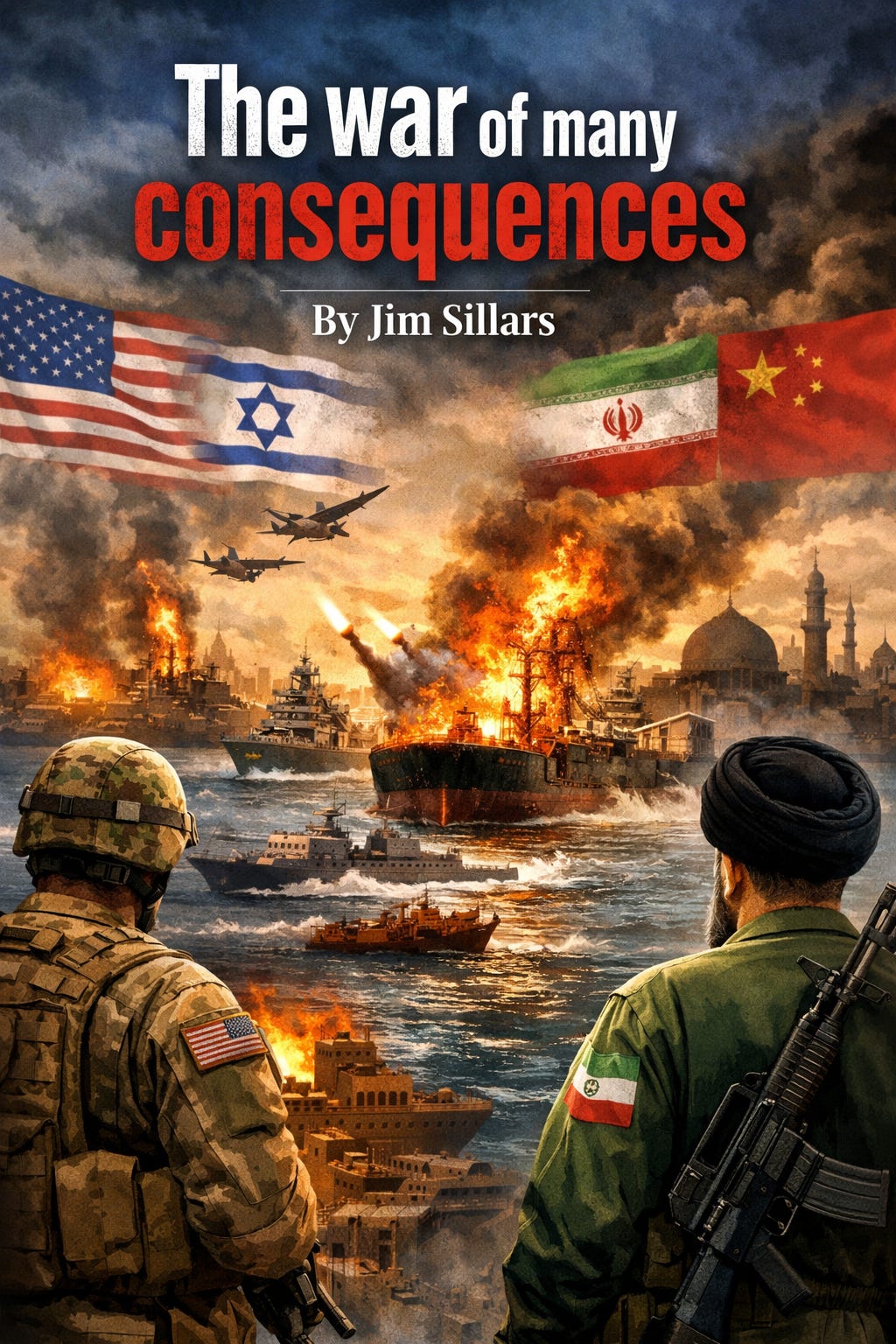
When it comes to the Persian Gulf region history shows there are no states or regimes which have clean hands. There are no shining examples of respect for the individual human being or populations, superb government, or respect for and adherence to international law. That stricture applies to the UK, Russia and the USA as much as it does to the Gulf governments.
So, when it comes to the present crisis in the Gulf, we should set aside the idea of a clash between goodies and baddies. Looked at objectively, no matter what one may think about the theocracy that is Iran today, there were, and remain, sound geopolitical and economic reasons for opposing the Israel-US war on it. Those reasons are being played out on the world’s economy, and will have long term consequences for the USA’s relations with its allies.
The Trump contribution to China
Whatever may happen in the weeks ahead, one winner of the Gulf war is already known- China. Consider: for the past year the United States, through the actions of its president, has attacked the economies of all countries by weaponizing tariffs, made no difference in his targets between long-standing allies, neutral developing states, and potential adversaries. In a telephone call to Canada’s prime minister, who later released it on US television, Trump threatened to “ruin” its economy.
Alongside this state conduct, he has poured personal insults on the heads of Zelensky, Macron and Starmer, combined with revelations of his ignorance of history causing him to denigrate the dead of Nato allies who fought alongside Americans in Afghanistan. The bonds of trust and respect between the USA and European states, built up over the past 80 years have been stretched to breaking point.
The Trump administration has deliberately shattered the ordered system that has kept the world in a reasonable equilibrium: a world in which there was a reliable, predictable set of broad rules and conduct upon which countries, big and small, could rely upon in state- to- state relations.
His language, crude, often puerile, is more expected from a bully in a playground than from someone occupying the same office of predecessors who, whatever one thought of their general policies, were class acts. FDR, Reagan, Obama come to mind. Class and Donald Trump? The man demeans the office.
Now, with his war of choice against Iran declared won, but with a bunged- up sea exit from the Gulf in place, he wants the world to come to his rescue.
China, by comparison with the USA, a comparison it is making day in day out, is promoting the importance of the United Nations Charter, adherence to international law, the benefits of the trade rules embodied in the WTO, its conduct as a reliable trade partner, and its belief in dialogue not war. China is presenting itself as the stable major pillar of the world economy, not the major disruptor. China has “friendly” states with which it has special relations, but no military treaties with any other state which can drag into war.
China is far from being a paragon of virtue. It has used the power to close its market to punish those who cross its political path, as Lithuania and Australia (to mention but two) discovered, and its position as the supplier of rare earths is a lever it has pulled without hesitation. But in the context of a world crisis caused by United States action, it is now seen by many, especially in the global south, as a much more reliable superpower than its US counterpart. China’s mastery of the art of doing nothing, is paying handsome political dividends.
STATECRAFT
How did it come to this mess: a democratic country now intensely disliked in regions of the world, including those with which it has made alliances over the years, while an authoritarian one sees western leaders beat a path to its door, and much of the global south sees it as a far more sensible and stable partner?
It is all about statecraft. Something well understood in China as its dynasties have come and gone throughout the centuries. The present CCP dynasty has a legacy of statecraft not only from China’s history but from the years of its own pre and post-1949 struggles to survive and be recognised. The 1972 rapprochement with Nixon’s America was an outstanding example of the art, on both sides. That happened despite China being weak in the chaos of the cultural revolution, and America with a president who was the outstanding anti-Communist. Mao and Nixon had different but similar reasons for meeting. Neither agreed with the other on their respective political systems, but their state interests coincided. Mao wanted to demonstrate China’s non-reliance upon and independence from the Soviet Union, and Nixon wanted to place a wedge between the two major communist powers. Statecraft brought Mao and Nixon to shake hands.
Statecraft involves the assessment of one’s own power, how far it extends into other states and regions, the allies created and worth keeping onboard, its limitations as well as its potential, and that of possible adversaries and any allies they may have. It also requires a cold-blooded calculation of one’s true state interest, and action if any such is contemplated based on knowledge of the world’s people, their histories and their many complexities.
The United States does have a history of presidents exercising statecraft. FDR comes to mind, but the one engaged in our recent time, who expelled Saddam Hussein’s Iraq from Kuwait, is a classic example. Although he had a UN Security Council Chapter VII resolution in his pocket, George H.W. Bush knew that Saddam would exploit a sole American attack upon a Muslim country, making it impossible for Saudi Arabia to make itself available as the US military base for 500,000 troops, and aircraft, from which to launch an attack on Iraqi forces.
Bush needed to bring in others, Europeans not so much for the military power they would bring but the UN identity they would give him; and Arab states for the legitimacy they would bring in the eyes of the Arab street. America could win without the former, but he could not even start without the latter.
The Bush statecraft was impressive. His coalition worked, and he made sure it did not fracture when, with Saddam’s army expelled from Kuwait and the UN mandate secured, he did not go beyond it by invading Iraq itself and totally wiping out its military.
Thereafter, however, his statecraft disappeared. He encouraged the Iraqi Shia to rise up against Saddam who, allowed to keep much of his army and attack helicopters, proceeded to slaughter them. An additional statecraft failure was what Bush thought was a bonus – keeping a number of large US military bases in Saudia Arabia. This took no account of the real feelings of the Saudi people about infidels seemingly rooted in what they regarded as Muslim holy land, and it was from there that Al Qaeda emerged.
Trump and Statecraft? Even “Oxymoron” doesn’t fit the description
Statecraft must be learnt by reading books on history, military history, diplomacy, biographies, memoirs, academic investigation in the affairs of nations, engaging in discussion; all a necessary forerunner to being able to absorb and evaluate information before making a decision.
Learning it seems is an unknown world for Trump. Daniel Finkelstein in The Times writes: “I remember how startled I was when first told by an advisor to Donald Trump that the president didn’t read anything. If you want to brief him the best way was to go on daytime television and hope he was watching. And this subsequently became a widely known and practised technique.” The appointment of Hegseth, a macho television performer, to the war department seems to bear that out.
One thing is for sure, he has never read a word on the history of Islam, the persecution of the Shia within it, the place of Iran in the Shia world, and the importance of the martyrdom of the Imam Hussein in 680 CE in the mental make-up of the 200m Shia and their view of the outside world even today. When Trump described the clerics in Iran as “deranged scumbags” that was far from how they are seen in Shia eyes, where they are respected as scholars gifted with divine knowledge. Trump’s contempt will not be forgotten.
Western logic doe not apply to the Shia. Consider Hezbollah and its deliberate intervention in support of Iran. The disparity in power between it and Israel is enormous, and the absolute certainty of Israel responding as it has done would be known. Yet, the rockets went into northern Israel. Standing by its Shia brethren came before any other consideration. The same applies in Iraq where the Shia there see Iran very differently from America; and we are still waiting on the Houthis of Yemen to kick into this conflict.
The superpower and its client state: a unique relationship in world history
Trump has now mentioned the war on Iran more than 90 times on his Truth Social. He has given impromptu press conferences sitting his golden chair in the White House, yet there remains doubt about why he entered into it.
The only coherent statement we have is from Marco Rubio, Secretary of State but also the National Security Adviser to whom all intelligence flows through to the president. If Rubio is to be believed, Trump went to war because Israel made a unilateral decision to strike and the US had to follow, because it was bound to be attacked as Israel’s ally. Think of that: the superpower led into war by its client.
If Oman is to be believed, and there has been no rebuttal to Oman from the USA, negotiations between the USA and Iran were making progress and due to resume on Tuesday 3rd. March. Could it be that the supreme leader and most of the Iranian leadership were all together, discussing the expected further negotiations, unsuspecting sitting ducks, when Israel struck on Saturday 28th February? It is not outlandish to see the last thing Israel wanted was a successful negotiation that left the Iranian regime in situ; and that it attacked on the Saturday to destroy any chance of that happening on the Tuesday. It has, after all, been Netanyahu’s ambition for 40 years to kill the regime and knock Iran out of the power equation in the Middle East.
This is primarily Israel’s war of choice not Iran’s. A number of academics and former diplomats who speak Hebrew are telling us, although not reported in western mainstream media, that the Israeli ministers are intent on creating a Greater Israel, an ambition to be the undisputed hegemon of the Middle East, something that cannot be accomplished while Iran still has the potential of being a significant player in the region.
The potential consequence of Unconditional Surrender: world economic catastrophe
When Trump declared one of his war aims was unconditional surrender by the Iranian regime, I doubt if he understood the import of that to those to whom it was directed. It means there can be no negotiated settlement, just abject submission, and that the victor can do anything it wants to the vanquished.
Given their history that is a proposition no Shia regime can ever accept. Fighting to the last then going into martyrdom is their only possible reaction to such a threat. And this is where the world should tremble.
Right now world leaders are concerned with getting the Strait of Hormuz open to all shipping, and it looks as though, at the time of writing, Trump is contemplating Marine boots on the ground for that purpose. The view all round seems to be that if that is done, then we can all relax, the price of oil will drop back below $70, and Israel and the US can continue to knock seven bells out of Iran until the regime can fight no more.
But closing the Strait is far from the worst Iran can do to world oil, gas and fertiliser supply. If the Strait is forced open, and there is no halt to Israeli and US action, Iran is capable of destroying completely the energy industries of every Arab Gulf country, and with such action gifting the world an economic catastrophe. If world leaders have not thought of that possibility, they should.
In the past week western leaders have telephoned Iran’s president with lectures on his country’s unacceptable actions. They would be better turning on those who started the war and did what, so far, they have avoided – make a public demand for Trump and Netanyahu to end the war.
Reagan, a class act, really? Clinton was a far better President. Also, tali,g of allies, the SNP wanted out of NATO until quite recently.
Patronising clown.